Too many manual handoffs
Work depends on repeated human intervention, status chasing, and duplicated effort between teams, creating friction that compounds with every step.
Workflow Optimization
We partner with organizations to eliminate operational drag, strengthen process flow, and build workflows that move smoothly across teams and systems.
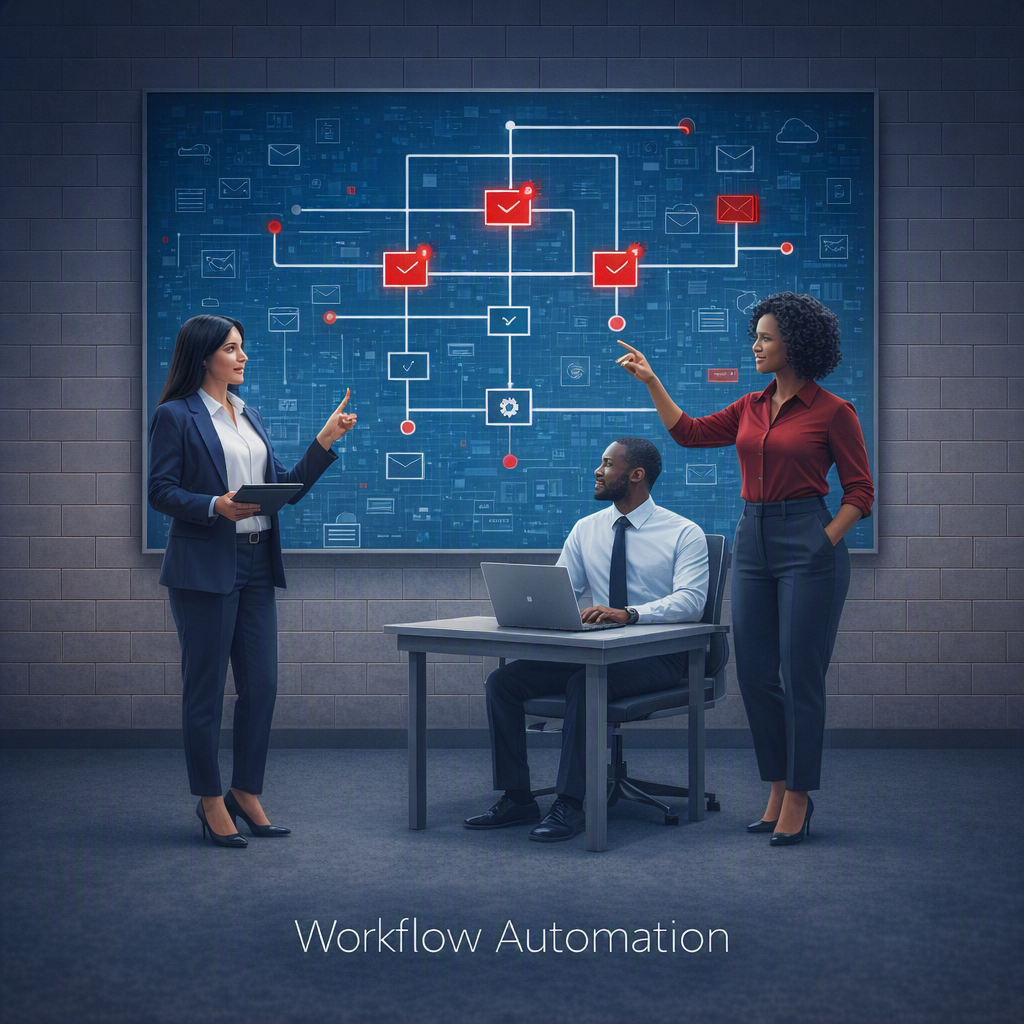
Workflows rarely break all at once, they slow down gradually. New tools get added, responsibilities shift, and manual steps accumulate until everyday execution becomes slower, more fragmented, and harder to scale.
Work depends on repeated human intervention, status chasing, and duplicated effort between teams, creating friction that compounds with every step.
Critical workflows stall when it’s unclear who owns a step, a decision, or an exception, leading to delays, rework, and inconsistent execution.
Processes slow down when information must be copied, re-entered, or validated across multiple tools that don’t communicate cleanly.
Small recurring delays accumulate over time, creating operational drag that becomes normalized, until the organization tries to scale and the cracks widen.
Better workflows improve more than speed, they strengthen coordination, increase reliability, and give teams more space to focus on the work that actually moves the business forward.
Reduce repeated delays, manual steps, and cross-team confusion so everyday execution feels lighter and more predictable.
Help work move through the business more efficiently with fewer bottlenecks, cleaner handoffs, and clearer routing.
Connect tools and processes more intentionally so teams spend less time working around gaps and more time delivering value.
Build workflows that can support higher volume and complexity without adding unnecessary chaos or overhead.
Our workflow optimization work spans process design, systems coordination, and practical operational execution, helping teams move with more clarity, consistency, and speed.
Understand how work actually moves through the organization and identify where friction, duplication, and delays are concentrated.
Restructure processes so work flows more cleanly across people, systems, and decision points.
Improve how workflow tools, operational systems, and data move together to support smoother execution.
Highlight the parts of the workflow that can be supported by automation once the underlying process is structured correctly.
Review how the current workflow actually operates, the tools involved, the ownership structure, and the points where work most often slows down or gets stuck.
Define the process issues that matter most and align on the improvements that will create the greatest operational value for the business.
Create a stronger workflow model with clearer handoffs, roles, decision points, and system alignment so work can move more cleanly across teams and tools.
Support the process, system, and team-level changes required to put the improved workflow into practice and ensure it sticks.
Improving workflows isn’t just about fixing broken steps, it’s about clarifying ownership, reducing friction, and strengthening the systems and handoffs that keep work moving. When teams align processes, roles, and tools, they eliminate bottlenecks, improve throughput, and create more consistent, accountable execution across the organization. These real-world engagements show how structured workflow optimization creates measurable impact across different industries and operational environments.
Book a strategy call to talk through where operational drag is showing up, how work moves today, and which workflow improvements can create the clearest business impact.
Apply practical AI and automation to reduce manual work and improve execution.
Learn more →Modernize systems, workflows, and architecture to support long-term growth.
Learn more →Turn operational information into clearer reporting, insight, and decision support.
Learn more →We help teams reduce operational drag, clarify ownership, and build workflows that move with less friction and more consistency.