
Work stalls at every handoff
Teams lose time chasing updates, nudging approvals, and manually routing tasks because no layer is coordinating the full workflow across tools and people.
Intelligent Orchestration
We help organizations coordinate workflows, systems, and decision points so work moves more reliably across teams and tools, without the friction that slows execution. When processes depend on too many disconnected steps, orchestration becomes the layer that brings everything together.
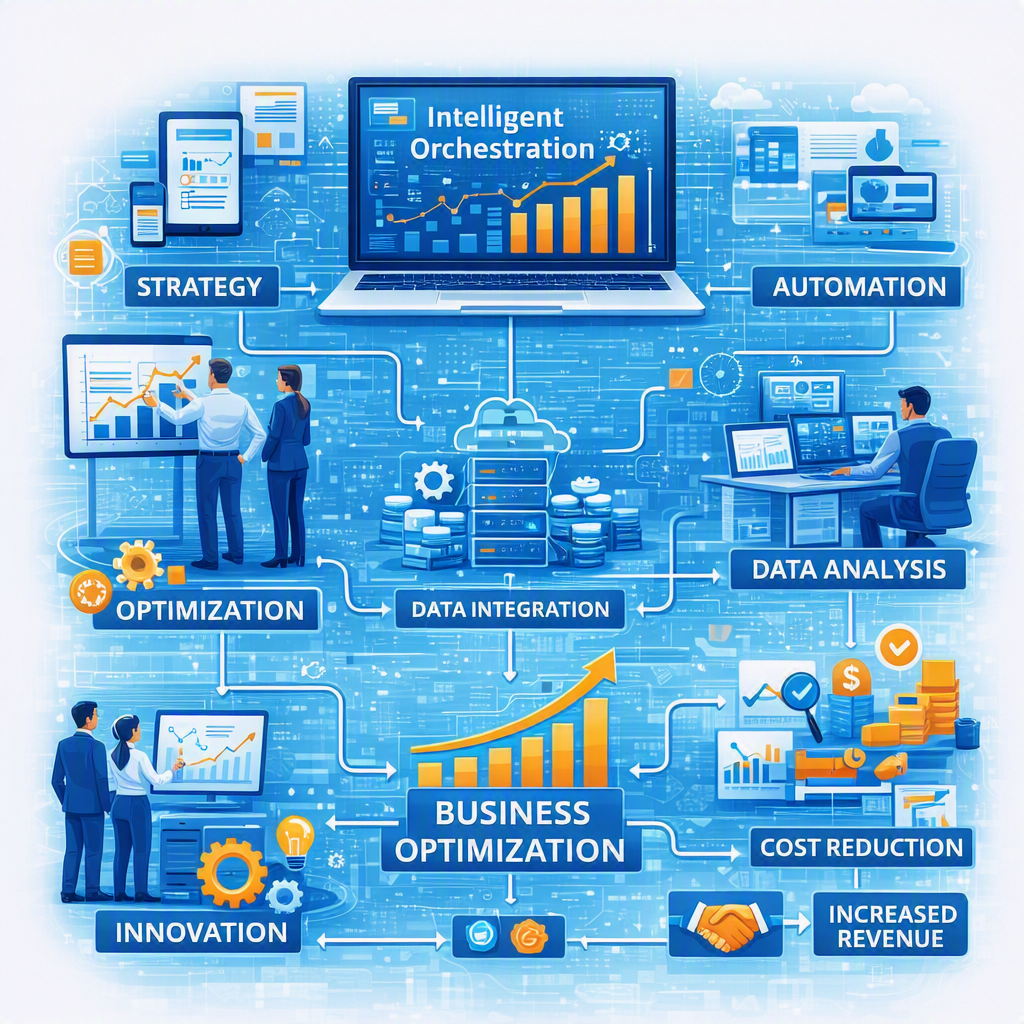
When workflows depend on too many disconnected systems, approvals, and people, execution becomes inconsistent and harder to manage. Orchestration problems show up as delays, rework, and operational drag, not because teams aren’t trying, but because the workflow itself isn’t designed to move as one.
Teams lose time chasing updates, nudging approvals, and manually routing tasks because no layer is coordinating the full workflow across tools and people.
Information has to be re-entered, checked, or copied between platforms, creating slowdowns and errors that compound across the process.
Critical decisions sit outside the flow of work, forcing teams to pause, escalate, or wait for context that should already be available.
When something unusual happens, the workflow has no clear fallback path, causing delays, confusion, and inconsistent handling across teams.
Orchestration brings clarity and control to the way work moves across systems, teams, and decision points. These capabilities create a coordinated operational layer that reduces friction, strengthens execution, and keeps processes moving the way they’re meant to.
Design end-to-end workflows that coordinate tasks, approvals, data movement, and decision points into a single, reliable operational flow.
Build orchestration layers that connect tools and platforms so work can move cleanly across systems without manual routing or duplication.
Embed automation into the workflow where it reduces effort, accelerates throughput, and supports teams with consistent, repeatable execution.
Integrate decision logic, rules, and context directly into the workflow so teams can act faster and with fewer escalations.
Create structured fallback paths for exceptions, edge cases, and escalations so unusual scenarios don’t derail the entire process.
Deploy orchestration layers into real operations and refine them through iterative improvements that strengthen reliability over time.
Intelligent orchestration turns fragmented processes into coordinated operational systems. These deliverables give teams clearer workflows, stronger execution support, and a foundation that continues to improve as the organization grows.
A complete workflow model that defines how tasks, approvals, data, and decisions move across systems and teams.
A functioning orchestration layer that connects tools, automates key steps, and keeps work moving without manual intervention.
Clear operational insights, decision paths, and workflow visibility so teams understand what’s happening, what’s next, and where attention is needed.
A roadmap for strengthening orchestration over time through iterative improvements, expanded automation, and deeper system alignment.
Document the current workflow, systems, decision points, and handoffs to understand where coordination breaks down and where orchestration will create the most value.
Shape the orchestration model, the workflows, automation points, decision logic, and cross-system connections that will keep work moving reliably.
Deploy the orchestration layer across tools and teams, integrating automation, routing, and decision support directly into the operational flow.
Run the orchestration system in real operations, ensuring workflows execute consistently and teams have the visibility and support they need day-to-day.
Strengthen the orchestration layer over time through iterative improvements, expanded automation, and adjustments based on real-world performance.
We work across orchestration layers, operational systems, infrastructure foundations, and data platforms to connect workflows and reduce execution friction.


A focused mix of workflow strategy, system integration, automation depth, and delivery clarity, built to keep orchestration work moving with structure and reliability.
Shapes the end-to-end workflow model so processes, decisions, and handoffs align into a coordinated operational flow.
Connects systems, data, and platforms into a unified orchestration layer that moves work cleanly across tools.
Implements automation, decision logic, and intelligence features that reduce manual effort and strengthen workflow reliability.
Keeps orchestration work on track by aligning priorities, removing blockers, and ensuring changes land smoothly across teams.
Build tailored software around your workflows, systems, and long-term operating needs.
Learn more →Add dependable engineering capacity, technical leadership, and delivery structure to keep important work moving.
Learn more →Strengthen the cloud and infrastructure foundation your systems depend on every day.
Learn more →