
Manufacturing

Increase throughput with clearer, faster control

We help teams align production, quality, maintenance, and inventory workflows so work moves with fewer delays, fewer surprises, and stronger real-time visibility.

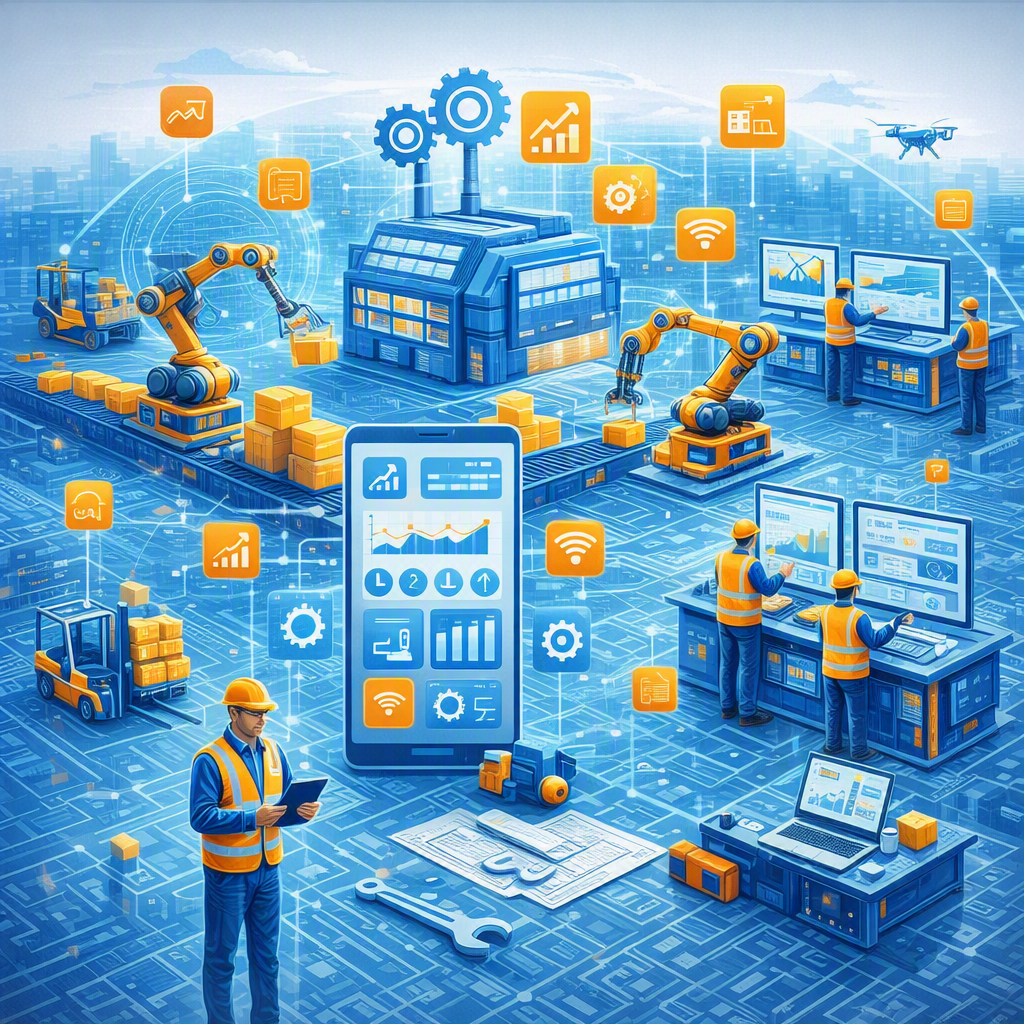
Manufacturing systems dashboard

Common challenges manufacturing teams face

Even the strongest plants slow down when visibility breaks between systems, teams rely on manual coordination, or production issues surface too late. These problems don’t show up all at once, they build quietly across shifts until throughput, quality, and predictability start to slip.

Challenge 01

Fragmented visibility between schedule, floor, and fulfillment

When planning, production, and fulfillment systems don’t share the same picture of what’s happening, teams lose the real-time clarity needed to keep output steady.

ImpactSchedules drift, materials arrive late, and teams spend more time reconciling data than moving work forward.
  • Disconnected production dataOperators, planners, and supervisors each see different versions of what’s running, blocked, or behind.
  • Blind spots across shiftsCritical updates get buried in spreadsheets or whiteboards instead of flowing across teams.
  • Reactive fulfillment adjustmentsDownstream teams scramble when upstream changes aren’t surfaced in time.
Challenge 02

Manual coordination that slows execution

When production depends on people passing updates between teams, machines, and systems, work slows down and errors creep in.

ImpactThroughput drops, handoffs become bottlenecks, and teams spend more time chasing status than keeping lines running.
  • Status updates through chat and paperOperators rely on memory or manual notes to trigger the next step.
  • Copy-paste workflowsData is re-entered across MES, ERP, and quality systems, increasing the risk of mistakes.
  • Work that stalls without nudgesTasks sit idle until someone manually pushes them along.
Challenge 03

Weak traceability and slow response to production issues

When quality, maintenance, and production data aren’t connected, issues surface too late, and small problems turn into costly downtime.

ImpactTeams struggle to pinpoint root causes, quality risks spread across batches, and recovery takes longer than it should.
  • No unified quality trailQuality checks, machine data, and operator notes live in separate places.
  • Issues buried in logsProblems stay hidden until they impact output or customer orders.
  • Slow root-cause discoveryTeams spend hours piecing together what happened instead of preventing it.

How we support manufacturing teams

Manufacturing operations run best when production, quality, maintenance, and inventory systems stay aligned. Our support focuses on strengthening the digital foundation behind plant operations so teams can move faster, reduce rework, and make decisions with clearer real-time visibility.

Plant operations and workflow tooling

Tools that help teams coordinate production, quality checks, maintenance tasks, and material flow without relying on manual updates.

  • Unified production workflows
  • Role-specific task flows
  • Real-time floor visibility

System integration across plant and business environments

Connecting MES, ERP, quality, maintenance, and scheduling systems so information moves cleanly across every part of the operation.

  • MES-ERP alignment
  • Cross-system data movement
  • Event-driven triggers

Automation for quality, approvals, and exception handling

Reducing manual steps in quality workflows, routing decisions, and issue escalation so teams can respond faster and with fewer errors.

  • Automated quality checks
  • Smart approval routing
  • Exception-ready workflows

Traceability, reporting, and decision support

Strengthening the data foundation behind production, quality, and maintenance so teams can trace issues, understand performance, and act quickly.

  • End-to-end traceability
  • Operational reporting
  • Decision support insights

Where this shows up in practice

Manufacturing improvement often starts by fixing the operational gaps that create drag between the production schedule, the shop floor, and the systems surrounding them.

See how we executed before

What stronger manufacturing operations make possible

When production, quality, maintenance, and inventory systems stay aligned, teams spend less time reacting and more time running the plant with clarity. These data points show how much impact better coordination and visibility can have on day-to-day execution.

Less delay$50B

estimated annual cost of unplanned downtime for manufacturers, with equipment failure causing 42% of that downtime.

Downtime isn’t just a maintenance issue, it’s a visibility and coordination problem that ripples across every shift.

Source: Deloitte, Smart Manufacturing

More control30%

improvement in decision-making speed for manufacturers with real-time visibility into production performance.

When teams can see what’s happening as it happens, they act earlier, adjust faster, and prevent small issues from becoming big ones.

Source: McKinsey, The Factory of the Future

Better scale20-30%

productivity improvement possible when digital manufacturing systems are scaled across plants.

Scaling isn’t just about adding capacity, it’s about building systems that keep performance consistent as complexity grows.

Source: BCG, Digital Manufacturing Transformation

Let’s strengthen the systems your manufacturing teams rely on

Plant operations move faster when production, quality, maintenance, and inventory workflows stay aligned. If you’re exploring ways to reduce delays, improve visibility, or modernize the systems around your floor, we can help you map the right next steps.

Message sent